Many startups and businesses fail not because of poor coding, but because of weak planning,
lack of validation, and ignoring users after launch. In this guide, we explain step by step how to
build software products that sell, using proven software development best practices.
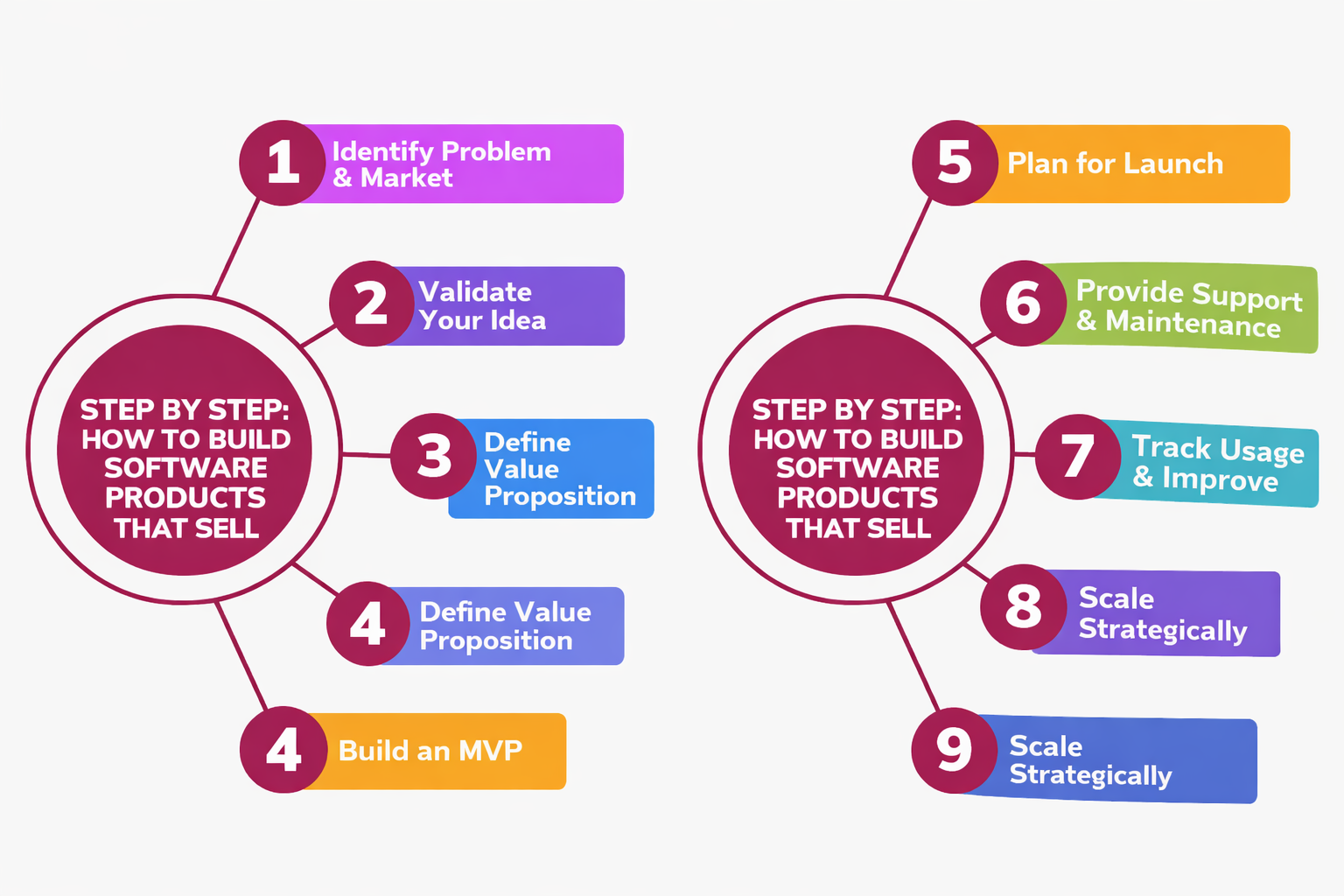
1. Identify a Real Problem Before Software Development
Successful software products always start with a real business problem, not just an idea.
Before starting software development, ask:
- What problem does this software solve?
- Who is the target user?
- How is this problem currently solved?
- Why is the current solution inefficient or expensive?
2. Validate Your Software Product Idea
Market validation is a critical step in software product development.
Ways to validate your idea:
- Create a landing page explaining your solution
- Collect feedback through user interviews
- Analyze competitors and existing software solutions
- Test demand with pre-orders or early access
3. Define a Clear Value Proposition
A strong value proposition explains why customers should choose your software.
Your message should be:
- Simple
- Outcome-driven
- Focused on benefits, not features
✅ “Automate your workflow and reduce manual work by 70%”
💡 Clear positioning improves conversions and search visibility.
4. Build an MVP (Minimum Viable Product)
An MVP is essential for startup software development and new digital products.
Focus your MVP on:
- Core functionality
- One primary use case
- Fast time to market
- Feature overload
- Over-engineering
- Premature optimization
5. Choose the Right Software Development Technology Stack
Your technology stack impacts:
- Performance
- Scalability
- Security
- Long-term maintenance costs
- Scalability for future growth
- Availability of developers
- Maintenance and support requirements
- Security standards
6. Focus on UX/UI Design for Better User Experience
User experience (UX) is critical to software success and customer retention.
Good UX design:
- Reduces learning time
- Improves engagement
- Increases customer satisfaction
- Lowers support costs
If users struggle to complete basic actions, usability needs improvement.
7. Use Agile Software Development and Continuous Testing
Modern software products are built using agile development methodologies.
Benefits include:
- Faster releases
- Continuous improvement
- Better alignment with user needs
- Reduced development risk
- Fewer bugs
- Better performance
- Higher software quality
8. Plan Software Product Launch Early
A common mistake is treating launch as an afterthought.
Before launching your software:
- Define pricing and monetization strategy
- Prepare onboarding materials
- Set up customer support systems
- Create marketing and sales content
9. Software Support and Maintenance After Launch
Post-launch support is a key factor in long-term success.
Ongoing software maintenance includes:
- Bug fixes
- Performance optimization
- Security updates
- Feature enhancements
- Customer support
10. Scale Your Software Product Using Data
Scaling should be driven by real usage data, not assumptions.
Use analytics to:
- Identify popular features
- Detect bottlenecks
- Improve performance
- Guide future development
Conclusion: Building Software Products That Sell
Successful software development is not just about coding—it’s about strategy, validation, execution, and long-term support.
To build software products that sell:
- Solve real problems
- Validate before development
- Build an MVP
- Focus on UX and performance
- Invest in support and maintenance